Design Outsourcing vs. Hiring Freelancers: Which Is Better?
A new campaign is launching next week. The sales team needs a presentation. Social media creatives are waiting for approval. A landing page needs updating, and your latest product feature still requires new interface screens.
The design workload is growing.
But hiring a full-time creative team may not be practical yet.
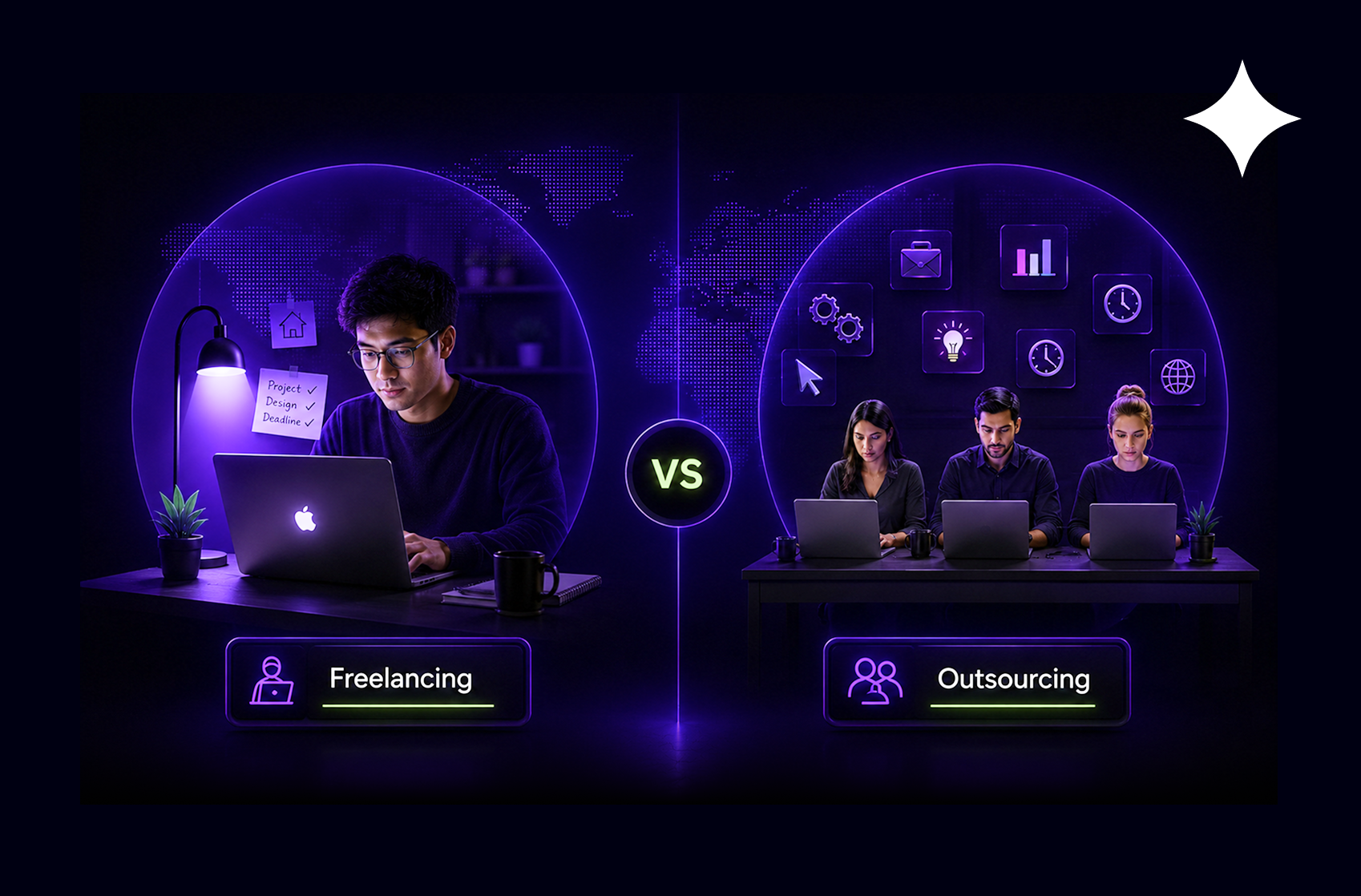
For many businesses, the decision comes down to two options: design outsourcing vs freelancers.
Both give companies access to external design expertise. Both can reduce the need for permanent creative headcount. And both can be more flexible than building an internal department from scratch.
However, the way they support a growing business is very different.
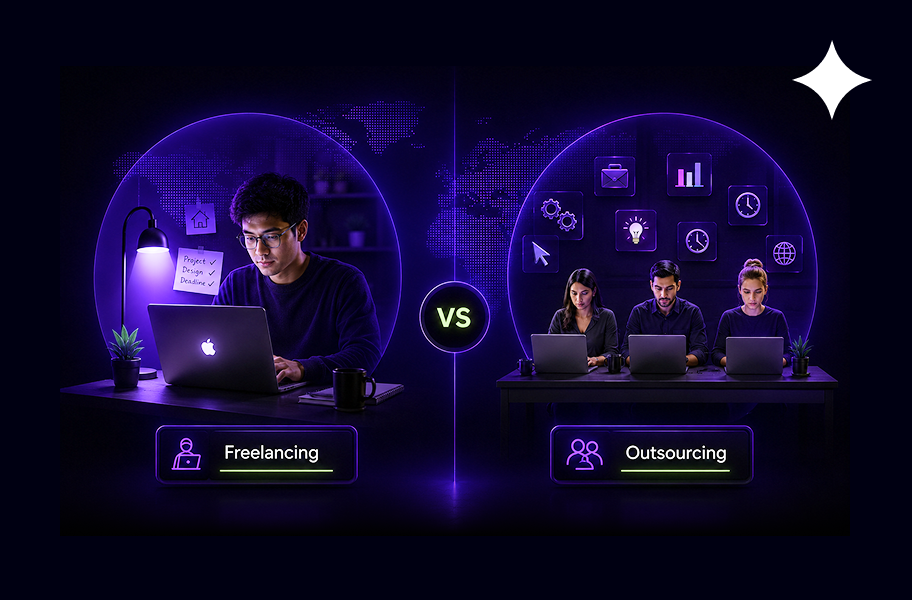
A freelancer is usually an individual hired for a specific project, skill, or period of time. Design outsourcing gives a business access to an external creative team or structured design partner responsible for ongoing work.
So, which model offers better value, consistency, and scalability?
The answer depends on how often you need design and how important creative operations are to your growth.
What Does Hiring a Freelance Designer Involve?
A freelance designer works independently and provides creative services directly to clients.
Businesses commonly hire freelancers for logo design, social media graphics, website layouts, presentations, illustrations, and other individual projects.
The model is simple.
You find a designer whose portfolio matches your requirements, discuss the scope, agree on a price, and begin the project.
For one-off work, this can be highly effective.
If your business needs a single brochure, a small group of ad creatives, or a short-term design project, hiring a freelancer may provide exactly the level of support required.
The challenge usually appears when design demand becomes continuous.
A freelancer who is available today may be fully booked next month. A designer who creates excellent branding may not have product UI/UX expertise. Another freelancer may be required for motion graphics or website design.
As the number of requests increases, managing multiple independent designers can become a creative operation of its own.
What Is Design Outsourcing?
Design outsourcing for businesses involves assigning creative work to an external design provider rather than relying entirely on internal employees or individual freelancers.
The outsourcing partner becomes an extension of your existing team.
Depending on the provider, an outsourced design team may support marketing graphics, branding, illustrations, website design, product UI/UX, email templates, motion design, and development.
Modern outsourcing models are also moving away from traditional project quotes and long agency retainers.
For example, Orra provides design support through a flat-rate subscription model. Businesses can submit unlimited requests and revisions, with active work capacity determined by the selected plan.
This creates a structured system for companies that need design regularly rather than occasionally.
Design Outsourcing vs Freelancers: The Main Difference
The biggest difference is not simply whether the designer works outside your company.
It is the structure behind the work.
A freelancer sells individual expertise and availability.
A design outsourcing partner provides creative capacity through an organised service.
That difference affects communication, turnaround times, consistency, skill coverage, and the ability to scale.
Neither option is automatically better in every situation.
The right decision depends on whether your design requirements are isolated or operational.
Freelancers Can Be Excellent for Specialist Projects
Freelancers are often the right choice when a business knows exactly what it needs.
Imagine you need a specific illustration style for one campaign.
You may find an illustrator whose portfolio perfectly matches the creative direction. There is little reason to hire a larger design team if the requirement begins and ends with that project.
The same applies to specialist creative work.
A highly experienced freelance animator, packaging designer, or 3D artist can bring deep expertise to a defined brief.
Businesses also benefit from the flexibility of hiring only when a project appears.
There is no ongoing subscription or permanent employee cost.
However, this flexibility works best when the workload is manageable.
Once design requests become frequent, the freelance designer vs design outsourcing comparison begins to change.
Freelance Availability Can Become a Business Risk
A freelancer runs an independent business.
Your company is rarely their only client.
They may be working on several projects, taking planned leave, travelling, or accepting a larger contract that changes their availability.
None of this makes freelancing unreliable by definition.
It simply means a business has limited control over an independent professional’s capacity.
For occasional design work, that may not matter.
For a marketing team launching campaigns every week, it can create bottlenecks.
If your regular designer is unavailable, your team needs to find someone else. The new designer needs a brief, brand files, examples, context, and feedback before they can work effectively.
The cost is not only a delayed design.
Internal employees also spend time sourcing, onboarding, and managing the replacement.
A reliable design partner reduces this dependency on one person’s schedule by providing a team-based creative workflow.
Compare Freelance Design Costs Beyond the Project Quote
Freelancer pricing can appear straightforward.
You receive an hourly rate or fixed project estimate and approve the cost.
But businesses with recurring design needs should examine total freelance design costs over several months.
Consider a marketing team that needs social graphics, paid ad variations, sales presentations, landing page design, email assets, and occasional motion graphics.
One freelancer may not cover every requirement.
The company may hire a graphic designer, UI/UX designer, motion designer, and web specialist separately.
Each person has a different rate, invoicing process, schedule, and revision policy.
There may also be rush charges when deadlines are tight or additional fees when the original project scope changes.
A subscription-based outsourcing model makes creative spending easier to forecast.
Orra’s design subscription pricing uses flat monthly plans based on creative scope and active request capacity. Unlimited requests and revisions are included within the service structure.
For businesses with continuous demand, predictable costs can be easier to manage than multiple changing freelance invoices.
Brand Consistency Becomes Harder With Multiple Freelancers
A strong brand should feel connected across every customer touchpoint.
The website, social media content, presentations, advertisements, email graphics, and product experience should appear to belong to the same organisation.
When several freelancers work independently, maintaining that consistency requires strong internal creative management.
One designer may interpret the brand guidelines conservatively.
Another may introduce new visual ideas.
A third may use spacing, typography, or imagery differently.
Each design might look good individually while the overall brand gradually becomes inconsistent.
An outsourced design team can create a more controlled workflow.
Brand guidelines, colours, fonts, references, and existing assets are established within the working process. The same creative relationship develops over time rather than restarting with every new designer.
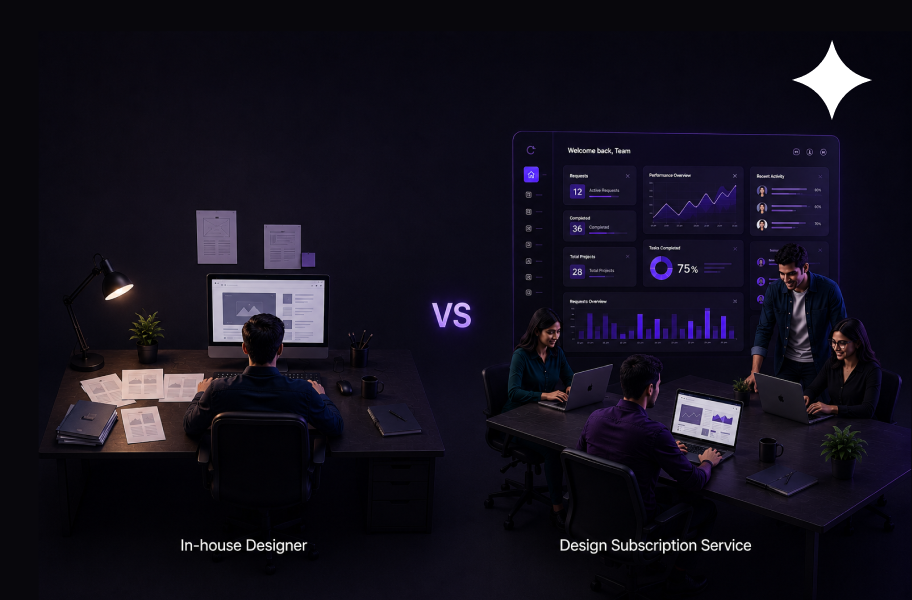
Orra, for example, uses a dashboard-based workflow where requests, feedback, files, and approvals are managed in one place.
That continuity helps external design support operate more like an extension of an internal creative function.
Design Outsourcing Offers Broader Skill Coverage
Modern businesses rarely need only one type of design.
Marketing may require campaign assets.
Sales needs presentations.
The website needs new pages.
Product teams require interface design.
Social campaigns may need animation.
The design outsourcing vs freelancers decision therefore becomes partly a question of skill coverage.
With freelancers, companies can certainly hire specialists for every requirement.
The challenge is managing those relationships.
A broader outsourcing partner can provide several creative capabilities within one service.
Depending on the selected Orra plan, its design services cover graphic design, email templates, custom illustrations, branding, website design, motion design, product UI/UX, and Webflow or Framer development.
Instead of finding a new provider whenever the type of request changes, teams can keep creative work within a connected system.
Scalable Design Support Matters During Growth
Design demand rarely increases in a perfectly predictable line.
A company may have a normal workload for several weeks and then suddenly prepare for a product launch, event, seasonal campaign, or major client project.
The creative queue expands quickly.
With freelancers, scaling usually means asking your existing designer to accept more work or hiring additional people.
Both options require coordination.
Scalable design support gives businesses a way to adjust creative capacity without rebuilding the workflow every time demand changes.
In Orra’s subscription structure, businesses select plans according to the services they need and can add active request capacity when more work needs to move simultaneously.
Requests can remain queued while active projects are completed.
This does not mean every project is designed at the same time. It means the business has a defined workflow for managing ongoing creative demand.
For agencies, startups, and marketing teams, that operational visibility can be particularly valuable.
Communication Is Part of the Cost Equation
Design quality matters, but the process surrounding the design also consumes resources.
Think about how much time your team spends searching through email threads, repeating feedback, sharing brand files, checking availability, requesting updated timelines, and confirming which file is final.
With one freelancer and one project, communication may be simple.
With five freelancers and fifteen active requirements, it can become fragmented.
A structured outsourcing process centralises more of the workflow.
The objective is not to eliminate communication.
Good design requires clear briefs and useful feedback.
The objective is to make communication easier to track.
When requests, comments, revisions, and approvals are connected to the project, teams spend less time reconstructing previous conversations.
This operational efficiency should be considered when comparing the real cost of external design options.
When Should You Hire a Freelancer?
A freelancer can be the better choice when your requirement is highly specialised, short term, or clearly defined.
For example, you may need a particular illustration style for one campaign or a designer with deep experience in a niche industry.
Freelancers can also work well for businesses with very occasional creative requirements.
If you only need a few design projects each year, paying for ongoing creative capacity may not be necessary.
The key is workload frequency.
When design is an occasional project, freelance flexibility can offer excellent value.
When design becomes a recurring business function, managing individual freelancers may create unnecessary complexity.
When Is Design Outsourcing the Better Option?
Design outsourcing is often more suitable when creative work arrives consistently.
Marketing teams running multiple campaigns need a dependable design pipeline.
Startups need product and marketing assets without building a large internal team.
Agencies may need additional capacity when client workloads increase.
Growing businesses often need several design disciplines but cannot justify hiring a specialist for every role.
In these situations, an outsourced partner provides more than design execution.
It provides a repeatable creative system.
That can make design outsourcing for businesses a stronger long-term option when consistency, capacity, and predictable budgeting are priorities.
Design Outsourcing vs Freelancers: Which Is Better?
If your business needs one specialist for a clearly defined project, hiring a freelancer may be the better choice.
You can select the exact expertise required and pay for the specific work.
But if design requests are becoming a regular part of your marketing, product, or growth operations, design outsourcing can offer greater continuity.
You gain access to broader creative capabilities, a structured workflow, predictable capacity, and a design relationship that develops with your brand.
The better option is ultimately determined by how your business uses design.
Occasional work needs flexible talent.
Ongoing creative demand needs a reliable system.
Build a More Reliable Design Workflow With Orra
Your team should be focused on launching campaigns, improving products, and growing the business—not repeatedly searching for available designers.
Orra provides ongoing creative support through a flexible design subscription built for businesses with recurring design needs.
Submit unlimited requests, manage feedback through one dashboard, and access a broader range of creative capabilities without coordinating multiple freelance relationships.
Explore Orra’s design subscription plans and find the level of support that fits your workflow.
Because when design becomes part of everyday business growth, you need more than someone who is available for the next project.
You need a creative system built to keep moving.