How Much Does a Graphic Design Subscription Cost in 2026? Complete Pricing Guide
Introduction
Design costs can be difficult to forecast when every project is quoted separately. One month, a business may need a handful of social media graphics; the next, it may need paid ad variations, a sales deck, email templates, website updates, and campaign visuals. For startups and small businesses, these changing requirements make it hard to plan a reliable creative budget.
A graphic design subscription offers a different approach: instead of paying separately for each task, a business pays a recurring fee for ongoing access to design support. But how much should you budget in 2026, what affects pricing, and how do you know whether a subscription is worth it?
This guide explains typical pricing models, what to compare before subscribing, and how Orra’s published plans are structured. The focus is on cost and budgeting—not a general explanation of how unlimited design works—so you can make a practical decision for your team.
What Is the Average Graphic Design Subscription Cost in 2026?
Graphic design subscription cost depends on the provider’s scope, the number of active requests, the creative disciplines included, and the complexity of the work. As a broad budgeting guide, entry-level services commonly fall around $400–$600 per month, while broader creative subscriptions may range from roughly $900 to $1,500 per month. Enterprise services with dedicated teams, research, or custom workflows may use bespoke pricing.
These are planning ranges rather than an industry-wide price list. Some providers offer lower-cost packages with a narrower scope; others charge more for senior specialists, faster delivery, web development, motion, or product design.
The most useful comparison is not simply the monthly fee. It is what the plan covers, how much work can move forward at once, and how well the service matches your actual design workload.
Orra Graphic Design Subscription Pricing
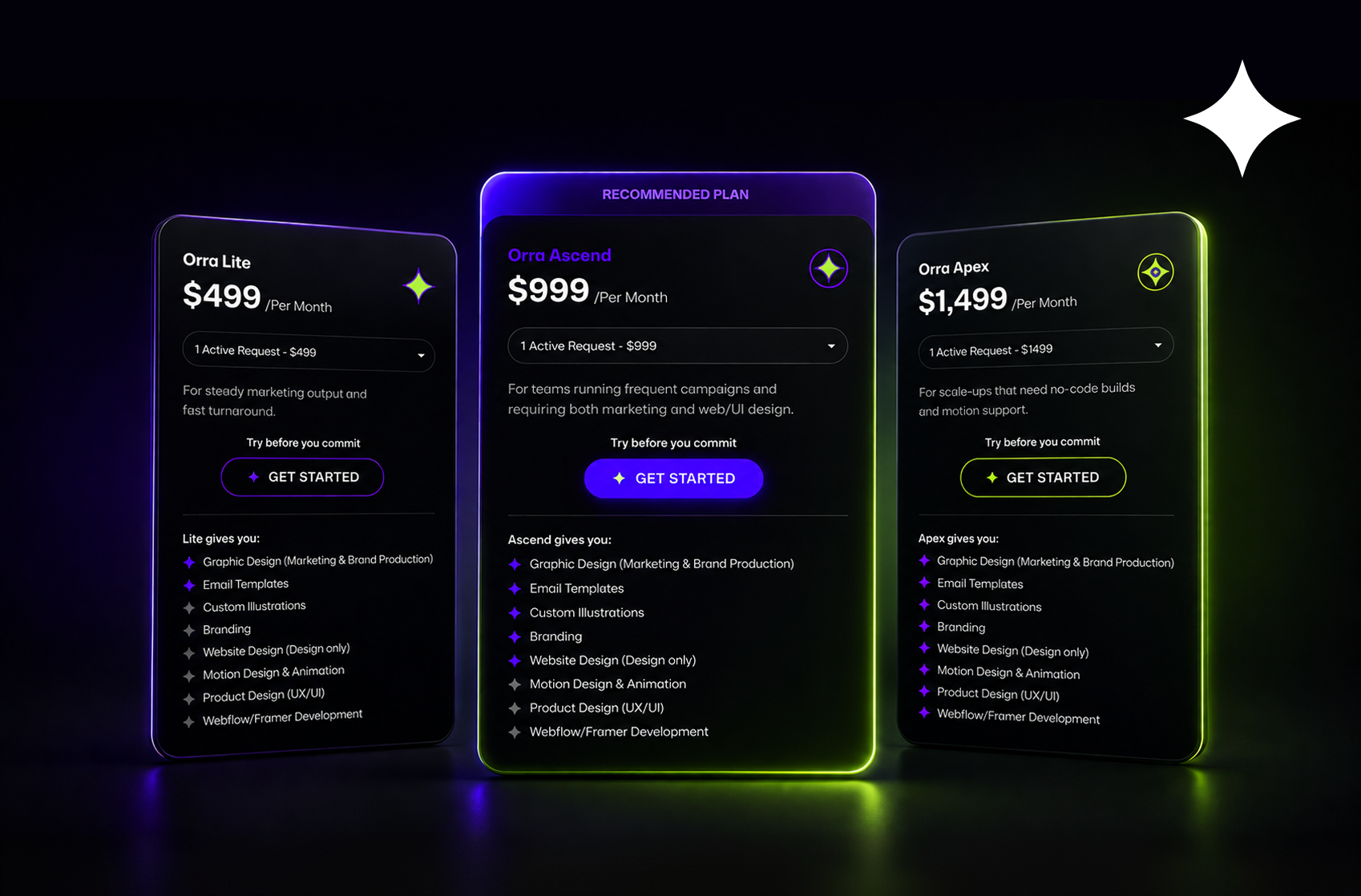
Orra’s public pricing page currently lists three standard monthly plans and a custom Enterprise option. Prices and inclusions can change, so check the live page before making a purchase decision.
Orra’s Published Plans at a Glance
What Do You Get for the Monthly Fee?
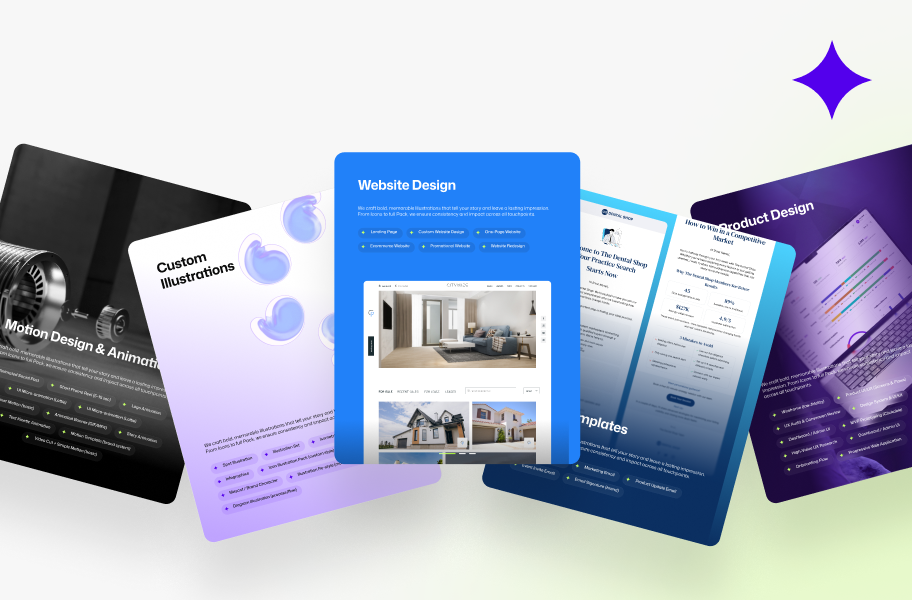
Orra lists graphic design for marketing and brand production, email templates, custom illustrations, branding, website design, motion design, product UI/UX, and Webflow/Framer development across its plan range, with exact coverage varying by tier. Plans advertise unlimited queued requests and revisions, a dashboard for submitting and reviewing work, and a dedicated account manager.
The phrase “unlimited requests” does not mean every request is produced simultaneously. The number of active requests depends on the selected plan; additional tasks remain queued. Orra says most standard tasks are delivered within 24–48 business hours, while complex work receives a clearer estimate.
Review the plan-by-plan details on Orra Pricing or explore Orra’s main website.
What Affects Graphic Design Subscription Pricing?
Active request capacity: Plans that allow more tasks to be worked on concurrently can suit teams with several urgent priorities. If work can be handled sequentially, a lower tier may be sufficient.
Range of services: A plan focused on marketing graphics may cost less than one that also includes product UI/UX, motion, and no-code development.
Complexity of deliverables: A simple social graphic is not comparable to a multi-page website, complex animation, or detailed product interface. Clarify how large projects are scoped.
Turnaround expectations: Faster turnaround and simultaneous work can affect the plan or service level required.
Brand and team requirements: Multiple brands, approvals, source-file needs, and specialised workflows can influence the right provider or tier.
Graphic Design Subscription vs. Paying Per Project
Project-based pricing works well when the scope is fixed and the work is occasional. A company commissioning one brand identity or brochure may prefer a single quote with a defined set of deliverables.
A subscription can be more practical when requests recur throughout the month. Instead of quoting every social post, ad variation, presentation, and landing page separately, the business uses one ongoing service and prioritises tasks in a queue.
To compare fairly, estimate monthly volume and include the hidden costs of sourcing vendors, writing briefs, managing invoices, coordinating revisions, and handling delays. A subscription is not automatically cheaper for every business; it is most useful when design demand is consistent and the team can make effective use of the available capacity.
How to Calculate Your Design Subscription Cost
Start with your last 60–90 days of creative work. List deliverables, how often they were needed, and what you paid. Include freelance invoices, agency fees, rush charges, and the time your team spent managing work.
Group requests by type: everyday marketing production, branding and illustration, web design, product UI/UX, and motion or development. Match those needs to the services included in each plan.
Assess how many tasks need to move forward at the same time. If your team can prioritise requests and work through them sequentially, a lower active-request tier may be enough. If campaigns, website work, and product tasks compete simultaneously, you may need a higher-capacity plan.
This process gives you a more reliable estimate than choosing a plan based on price alone.
Which Plan Makes Sense for Startups, SMBs, and Marketers?
Startups: A startup with regular social content, ads, and brand assets may begin with an entry-level plan. If it also needs website design or broader creative capabilities, compare higher tiers.
Small and medium-sized businesses: SMBs should consider how much recurring production they have and whether they need one design category or multiple disciplines. Predictability can be valuable when budgets are tight.
Marketing teams: Teams running several campaigns often need ongoing ad variations, social graphics, presentations, and landing page assets. Capacity and turnaround expectations may matter more than the lowest monthly fee.
Product and growth teams: If the workload includes product interfaces, design systems, motion, or no-code development, verify those capabilities are included in the selected plan.
Questions to Ask Before You Subscribe
- What deliverables are included in the plan?
- How many active requests can be worked on at once?
- Are revisions included, and what counts as one request?
- What turnaround should we expect for standard and complex work?
- Are source files and intellectual-property rights included?
- Can the subscription be paused or cancelled, and what are the terms?
- How are multiple brands handled?
- Is web design included, and does that include development or design only?
- Can we try the workflow before committing to a longer period?
Common Pricing Mistakes to Avoid
- Choosing only by the lowest monthly price instead of matching the plan to the work.
- Assuming unlimited queued requests means unlimited simultaneous production.
- Comparing a graphics-only plan with one that includes web, UI/UX, motion, or development as if the scope were identical.
- Ignoring internal time spent preparing briefs, managing feedback, and coordinating vendors.
- Not checking annual billing terms, cancellation rules, or current plan inclusions.
- Expecting every complex project to follow the same turnaround as a standard creative task.
Is a Graphic Design Monthly Subscription Worth It?
A graphic design monthly subscription can be worthwhile when creative work is a recurring operational need. It can make costs more predictable, reduce the number of separate vendor relationships, and create a consistent request-and-review process. It may be less suitable for businesses that need only one or two isolated projects per year or require a large strategic engagement with workshops and research.
The right question is not “Which subscription is cheapest?” but “Which option gives our team the right creative capacity for a sensible total cost?” Use your actual request history, compare the scope of each plan, and be realistic about how quickly your team needs work delivered.
Choose a Plan That Fits Your Creative Workload
Orra offers an on-demand design subscription for businesses that need ongoing creative support across marketing, branding, website design, product UI/UX, motion, illustrations, email templates, and selected Webflow/Framer development. Its published plans are structured around different levels of scope and active-request capacity.
Check Orra’s current pricing and plan details to compare inclusions, billing options, and the level of support that fits your team.
For startups, SMBs, and marketing teams, a clear understanding of design subscription cost can make creative planning more reliable. Start with your real workload, compare like for like, and choose the plan that supports your goals without paying for capacity you do not need.