Best White Label Design Services for Agencies in 2026
Introduction
Agencies are expected to deliver more creative work across more channels, often without increasing permanent headcount. A web agency may need landing page visuals and interface screens alongside development. A marketing agency may be managing paid ad creatives, social campaigns, presentations, and email assets for several clients at once. When delivery demand grows faster than internal capacity, deadlines and margins can come under pressure.
White label design services offer a way to add creative production capacity while keeping the client relationship and agency brand in your hands. The challenge is choosing the right partner. Providers differ in design capabilities, turnaround expectations, confidentiality practices, workflow, and pricing models.
This guide explains how to evaluate white label design services in 2026, which features matter most, what to ask before signing up, and how an agency can decide whether a subscription-based partner is the right fit.
What Are White Label Design Services?
White label design services allow an agency to outsource design production to an external provider while delivering finished work to its own clients under its own brand. The agency remains responsible for client communication, strategy, and account management; the partner supports execution behind the scenes.
Depending on the provider, work can include social media graphics, paid ad creatives, presentations, branding assets, landing pages, website design, UI/UX screens, illustrations, and motion graphics. A white label graphic design partner is useful when an agency has sold work but lacks enough in-house capacity to produce every deliverable.
White label does not automatically mean every provider offers the same level of invisibility, confidentiality, or client ownership. Confirm these terms before sharing client information or beginning production.
What Makes a Provider Worth Choosing?
The best provider is not necessarily the one with the biggest service list or lowest advertised price. It is the partner that fits your agency’s delivery model and protects the quality your clients expect.
1. Relevant portfolio and service coverage. Review work that matches your typical client deliverables. If your agency sells websites, check responsive page design and UI work. If you manage performance marketing, review ad creative variations, social assets, and campaign graphics.
2. Reliable turnaround and clear capacity. Ask how requests are prioritised, what counts as a standard task, and how complex projects are estimated. A provider should explain its capacity model rather than promise that every request can be completed instantly.
3. Strong quality assurance. Find out who checks work before delivery, how feedback is handled, and how revisions are tracked. A repeatable QA process helps reduce errors in dimensions, typography, copy placement, file formats, and brand usage.
4. Confidentiality and ownership. Confirm how client files are stored, who can access them, whether the provider will contact clients directly, and what rights you receive in the final work. Review intellectual-property terms and stock asset licences.
5. A workflow your team can use. The partner should make it easy to submit briefs, attach references, review designs, consolidate feedback, and retrieve final files. A simple process matters when multiple account managers coordinate work.
6. Transparent commercial terms. Compare total cost, active task limits, revisions, cancellation rules, minimum commitment, and any charges for complex work. The headline monthly price is only one part of the decision.
Common Types of White Label Design Services
Agencies should choose a partner according to the work they sell most often. Common categories include:
• White label graphic design: social posts, ads, banners, brochures, pitch decks, and other marketing assets.
• White label web design: landing pages, website layouts, responsive page designs, and design support for development teams.
• UI/UX design: user flows, wireframes, interface screens, prototypes, and product design support.
• Branding and visual identity: logo systems, brand collateral, illustration, and supporting visual assets.
• Motion and campaign creative: short animations, motion graphics, and assets adapted for digital campaigns.
Some providers specialise in one category, while others combine several disciplines. If your agency serves clients across marketing, web, and product work, a multi-disciplinary partner can reduce the need to coordinate separate vendors. Verify the depth of expertise in each category instead of assuming every listed service is equally specialised.
Project-Based Partner or Design Subscription?
Traditional project-based outsourcing works well when the scope is large and clearly defined—for example, a full website redesign or brand identity project. The agency agrees on deliverables, price, milestones, and approval stages before work begins.
A design subscription service is generally more suitable for recurring production. The agency pays a recurring fee and submits requests through an ongoing workflow. Depending on the provider, the plan may allow unlimited queued requests and revisions while limiting the number of tasks actively worked on at one time.
An unlimited graphic design service should be evaluated carefully: “unlimited” usually refers to the ability to queue requests, not unlimited simultaneous production. Ask about active capacity, delivery estimates, and how multi-part projects are divided into tasks.
How to Compare White Label Design Services in 2026
Build a short scorecard before choosing a provider. Rate each candidate against the factors below, then run a small pilot before routing important client work through the service.
Questions to Ask Before You Commit
• Can you work under our agency brand and avoid direct client contact unless authorised?
• Which deliverables and design disciplines are included?
• How many tasks can be active simultaneously?
• What is the typical turnaround for standard requests, and how are complex requests estimated?
• Are revisions included, and how is a revision distinguished from a new request?
• Will we receive source files and final exports?
• How are confidential client assets stored and accessed?
• Can we test the workflow with a pilot before committing?
• What happens if demand increases suddenly or we need to pause the service?
Where Orra Fits for Agency Teams
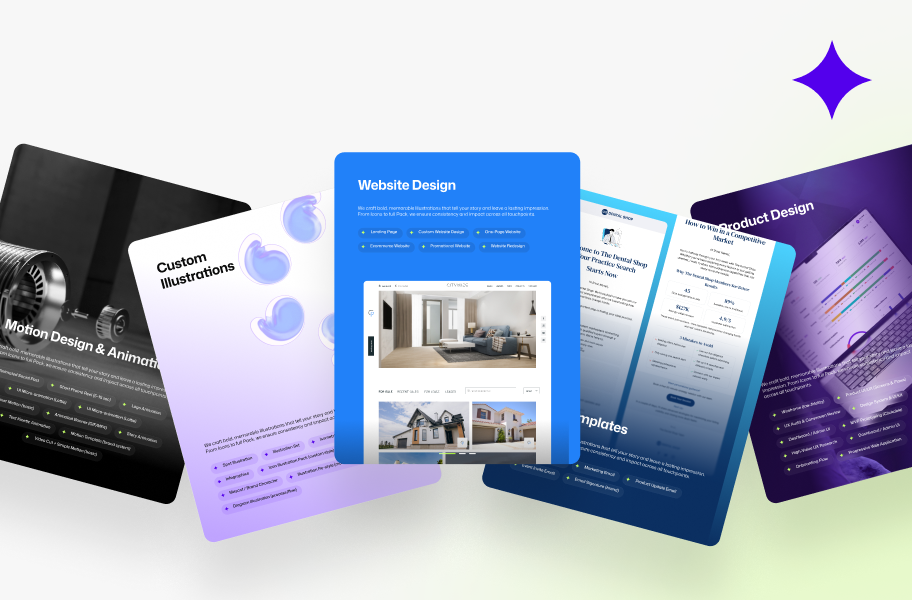
Orra offers an on-demand design subscription that agencies can use to support recurring creative production. Its published capabilities include graphic design, branding, custom illustrations, website design, email templates, motion design, product UI/UX, and Webflow or Framer development, depending on plan and scope.
The workflow supports unlimited queued requests and revisions, while the selected plan determines active request capacity. Most standard requests are stated to target delivery within 24–48 business hours on business days; larger or more complex tasks may take longer. Agencies should confirm current plan details, turnaround expectations, and confidentiality requirements directly before onboarding client work.
How to Integrate a White Label Partner Without Losing Quality
Start with a small group of repeatable tasks, such as social graphics, campaign banners, or presentation layouts. Create a standard brief template that includes the client’s objective, audience, message, dimensions, references, brand kit, and deadline. This reduces clarification cycles and helps the partner deliver more consistent work.
Keep client communication and strategic decisions within your agency. Review every deliverable against your own quality checklist before sending it to the client. Track turnaround time, revision frequency, internal coordination time, and client feedback during the pilot.
Once the process is reliable, expand the scope gradually. A structured onboarding process makes the external team feel like an extension of your agency without blurring responsibility for client strategy or final approval.
Common Mistakes Agencies Should Avoid
Choosing only by price. A low monthly cost can be offset by extra revisions, missed deadlines, or substantial management time.
Promising deadlines before checking capacity. Understand how active tasks and queued requests work before setting client expectations.
Sharing incomplete briefs. Vague instructions create avoidable back-and-forth. Provide context and references from the start.
Ignoring confidentiality. Agree on access, file handling, client contact, and ownership before sharing sensitive material.
Outsourcing strategy by accident. A production partner may execute the brief, but your agency should retain ownership of positioning, campaign strategy, and client relationships unless a wider role is agreed.
Final Thoughts
The best white label design services for agencies in 2026 are the ones that fit the agency’s service mix, quality standards, workflow, and margin goals. A specialist provider may be ideal for a narrow discipline, while a multi-disciplinary subscription can suit agencies with recurring work across graphics, web, branding, and product design.
Before committing, evaluate the portfolio, workflow, active capacity, revision policy, confidentiality terms, source-file handover, and total cost. Then test the relationship with a small pilot and measure how it affects delivery time, quality, and team workload.
A dependable white label partner should help your agency take on the right work with confidence—not create another layer of project management.
Build More Creative Capacity With Orra
If your agency regularly faces design bottlenecks, Orra’s design subscription may provide an additional production layer without requiring immediate full-time hires. Explore its service scope and current plans to see whether the workflow aligns with your agency’s client commitments.
White Label Provider Evaluation Scorecard
Related Orra article: How Subscription-Based White-Label Design Services Can Scale Your Agency
Explore Orra: Website | Pricing and plans | Blog library